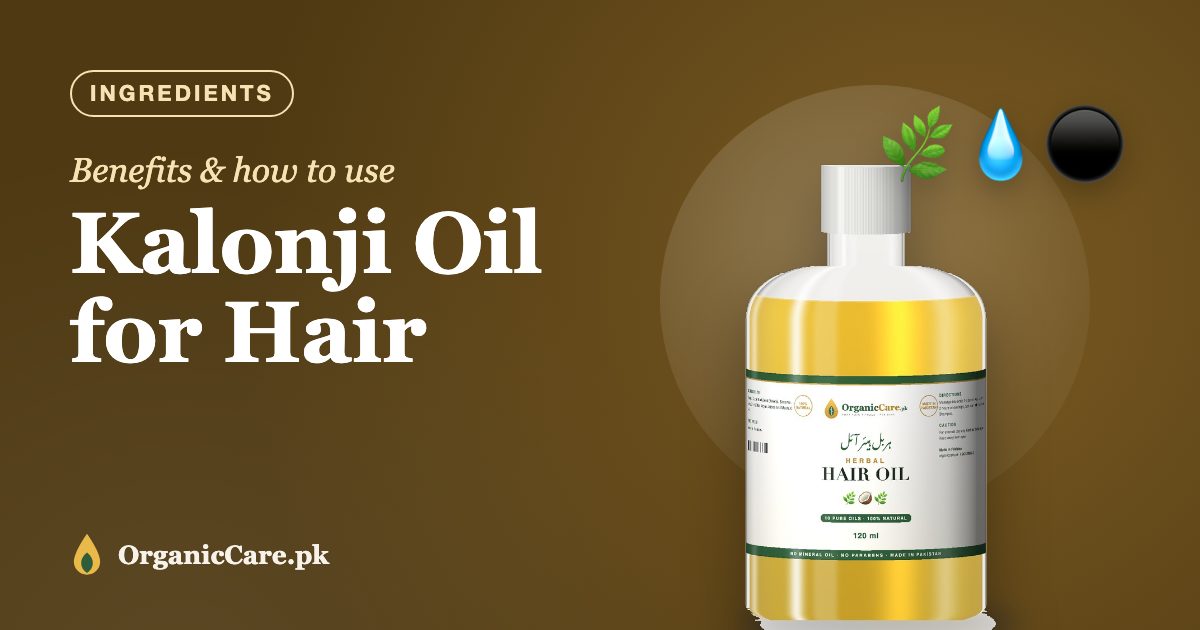
What is kalonji oil?
Kalonji is the small black seed of Nigella sativa, found in almost every Pakistani kitchen. Cold-pressing the seeds gives a dark amber oil with a warm, peppery smell. It has a long history in desi and Middle Eastern home remedies for skin, scalp and hair.
What does kalonji oil do for hair?
- Calms the scalp. Its best-known use is for a dry, tight, itchy or lightly flaky scalp.
- Conditions strands. Like other plant oils, it smooths the hair surface so hair tangles and snaps less.
- Supports fuller-looking hair over time, mainly by reducing breakage.
Lab studies show black seed oil and its main compound, thymoquinone, have antimicrobial and anti-inflammatory activity. That supports its traditional use for scalp comfort. Studies of kalonji on human hair are small, so be wary of anyone promising it will "regrow" hair.
How do you use kalonji oil on hair?
- Dilute or blend it. Pure kalonji oil is strong. Use a ready blend, or mix 1 part kalonji with 2 parts castor, olive or coconut oil.
- Apply to the scalp in sections with your fingertips.
- Massage for 5 minutes.
- Leave for 1–2 hours. Skip overnight oiling if you have dandruff.
- Wash out with a gentle or neem-based shampoo.
- Repeat twice a week.
Is kalonji oil good for dandruff?
It can help with a dry, itchy scalp and mild flakes, especially combined with a neem and tea tree shampoo. Keep oiling short: oil left on a flaky scalp overnight can feed the yeast that causes dandruff. For thick, greasy or yellow flakes, read our guide to dandruff in summer or see a dermatologist.
Kalonji oil vs onion oil — what is the difference?
Kalonji is mainly a scalp-comfort oil; onion is mainly a strengthening oil for breaking hair. They work well together, which is why many desi blends, including our Red Onion & Black Seed oil, combine them.
Who should be careful with kalonji oil?
- People with sensitive skin — patch test on the inner arm for 24 hours first.
- Anyone who gets redness, burning or a rash — stop and wash it off.
- Pregnant or breastfeeding women — check with your doctor before using concentrated oils.